
Thesis: Over the next six months, AI will not eliminate technology jobs wholesale, but it will rapidly reshape them—raising expectations for individual technologists to combine AI fluency with human judgment, while forcing companies to mature their operating models, governance, data readiness, and engineering discipline to turn AI adoption into measurable business value.
Preface
AI is no longer sitting at the edge of technology work. Over the next six months, it will become part of the default operating model for software teams, infrastructure groups, data teams, product teams, cybersecurity teams, and technology leadership. The biggest shift will not be that AI “replaces developers.” The more realistic shift is that AI changes the shape of technology work: less time spent on first drafts and repetitive tasks, more time spent on review, architecture, integration, governance, domain judgment, and delivery accountability. The next six months will be less about experimentation and more about normalization.
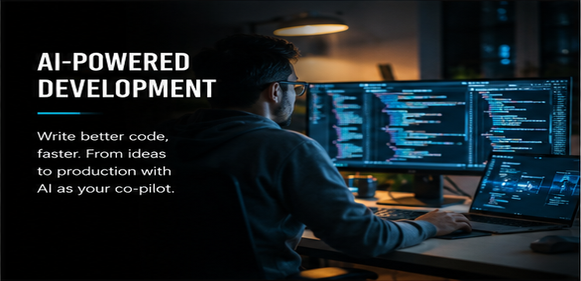
Prediction 1: AI-Assisted Delivery Becomes Expected, Not Optional
For technologists, using AI tools for coding, documentation, testing, analysis, and research will increasingly be treated like using source control, CI/CD, or cloud tooling. It will not be impressive by itself. It will be assumed.
Developers, architects, analysts, QA engineers, DevOps engineers, and data professionals will be expected to know where AI helps and where it introduces risk.
The strongest performers will not be the people who simply generate the most code. They will be the people who can use AI to accelerate work while still protecting:
- Quality
- Maintainability
- Security
- Business context
- Long-term system health
For companies, this creates a new baseline expectation: teams that do not adopt AI-assisted workflows may look slower, but teams that adopt AI without engineering discipline may create more technical debt faster.
The near-term advantage will go to organizations that embed AI into delivery pipelines, code review, documentation, knowledge management, and support workflows while keeping standards high.
Prediction 2: Junior Technology Roles Will Change the Most
Entry-level technology work has historically included tasks such as:
- Writing boilerplate code
- Fixing simple bugs
- Creating documentation
- Preparing test cases
- Researching APIs
- Learning system patterns through repetitive implementation
AI now handles many of those tasks reasonably well.
That does not mean junior roles disappear. It means the learning path changes.
New technologists will need to develop judgment earlier. They will need to understand system behavior, debugging, testing, security, and domain rules rather than only producing isolated code.
For technologists, this means juniors should focus on becoming strong reviewers, debuggers, and explainers. They should learn to:
- Ask better questions
- Validate AI output
- Write clear acceptance criteria
- Understand why a solution fits the business problem
- Explain trade-offs clearly
For companies, this creates a training risk. If AI removes too much low-level work, organizations may accidentally remove the apprenticeship path that produces future senior engineers.
Companies will need intentional onboarding, including:
- Code-reading exercises
- Architecture walkthroughs
- Paired delivery
- AI-assisted but human-reviewed learning paths
- Clear examples of good and bad AI-generated output
Prediction 3: Software Architecture Becomes More Important, Not Less
AI can generate code quickly, but it does not automatically understand a company’s:
- Legacy constraints
- Data ownership boundaries
- Regulatory obligations
- Integration patterns
- Operational risks
- Client expectations
- Long-term product strategy
That increases the value of architecture.
Over the next six months, the architecture function will become more central because teams will need guardrails for AI-generated and AI-assisted work.
Key questions will include:
- What patterns are approved?
- Which AI tools can touch which code or data?
- How do we validate generated code?
- How do we avoid duplicative internal tools?
- How do we manage token cost, security, and auditability?
- How do we prevent “fast code” from becoming unmanaged software sprawl?
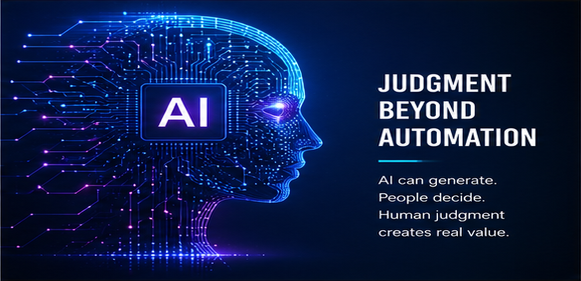
For technologists, architectural literacy becomes a differentiator. Developers who understand boundaries, observability, testability, deployment, data contracts, and threat models will get more value from AI than those who treat it as a code vending machine.
For companies, the prediction is clear: AI will amplify existing engineering maturity.
Strong engineering organizations will get faster. Weakly governed organizations will create more fragmentation.
Prediction 4: Productivity Gains Will Be Real, but Uneven
AI will improve productivity in many technology tasks, especially when the work is bounded, well-specified, and easy to validate.
Examples include:
- Unit test generation
- Documentation drafts
- Code explanation
- Migration scaffolding
- Log analysis
- Data transformation
- API client generation
- First-pass automation scripts
- Release note generation
But the gains will not be uniform.
AI performs best where the desired output is clear and reviewable. It is less reliable when the work requires deep system context, complex refactoring, security-sensitive changes, or ambiguous business rules.
For technologists, the smart approach is selective adoption. Use AI aggressively where output can be reviewed quickly. Be cautious where the cost of being wrong is high.
For companies, this means measuring AI impact with engineering metrics, not anecdotes.
Useful measures include:
- Lead time
- Deployment frequency
- Defect escape rate
- Review cycle time
- Incident rate
- Test coverage quality
- Developer satisfaction
- Rework
- Support resolution time
Lines of code generated is the wrong metric.
Prediction 5: “Prompting” Becomes Less Important Than Workflow Design
In the early wave of generative AI, many teams focused on prompt engineering. Over the next six months, the bigger differentiator will be workflow engineering.
The value will come from integrating AI into repeatable delivery flows, such as:
- Requirements refinement
- Backlog grooming
- Architecture decision records
- Code review assistance
- Test generation
- Release notes
- Incident summaries
- Customer support triage
- Knowledge-base maintenance
For technologists, the useful skill is not writing clever prompts in isolation. It is decomposing work, supplying context, checking output, and chaining AI into a reliable process.
The best AI users will behave like technical leads:
- Define the task
- Constrain the solution
- Provide relevant context
- Review the output
- Decide what is acceptable
- Capture reusable patterns for the team
For companies, AI enablement should move from “everyone try tools” to “here are approved patterns for using AI in delivery.”
That includes:
- Reusable prompt libraries
- Secure tool configurations
- Coding standards
- Review checklists
- Architecture templates
- Examples of acceptable AI-assisted work
Prediction 6: QA, Testing, and Security Roles Gain Influence
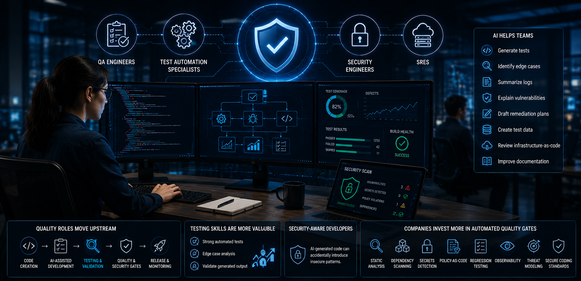
As AI increases the volume and speed of code creation, validation becomes more important.
QA engineers, test automation specialists, security engineers, and SREs will become critical to keeping AI-assisted delivery safe.
AI will help teams:
- Generate tests
- Identify edge cases
- Summarize logs
- Explain vulnerabilities
- Draft remediation plans
- Create test data
- Review infrastructure-as-code
- Improve documentation
But AI can also generate plausible-looking code with subtle defects.
That means quality roles will move upstream.
For technologists, testing skills become more valuable. Developers who can write strong automated tests, reason about edge cases, and validate generated output will stand out.
Security-aware developers will be especially valuable because AI-generated code can accidentally introduce insecure patterns.
For companies, expect more investment in automated quality gates, including:
- Static analysis
- Dependency scanning
- Secrets detection
- Policy-as-code
- Regression testing
- Observability
- Threat modeling
- Secure coding standards
Prediction 7: Data and Integration Work Become Bottlenecks
Many companies will discover that their AI ambitions are limited less by model capability and more by data readiness.
Common blockers will include:
- Poor data quality
- Unclear data ownership
- Inconsistent metadata
- Disconnected systems
- Weak access controls
- Limited API availability
- Lack of searchable internal knowledge
- Unclear retention and compliance rules
For technologists, this means data engineering, integration architecture, API design, identity, permissions, and knowledge management become high-value skills.
AI solutions need reliable context. Without trusted data pipelines and governed access, AI tools produce shallow or risky results.
For companies, the next six months should include serious investment in data foundations.
That does not necessarily mean massive enterprise data programs. It means practical steps:
- Catalog important data sources
- Define ownership
- Improve metadata
- Clean high-value datasets
- Expose APIs
- Build secure retrieval patterns for AI use cases
- Establish access controls
- Monitor data quality
Prediction 8: Technology Managers Will Be Judged on Adoption Discipline
Managers will not only be asked whether their teams are using AI.
They will be asked whether AI is improving:
- Delivery speed
- Quality
- Customer responsiveness
- Operational cost
- Employee effectiveness
- Knowledge sharing
- Support resolution
- Risk management
This is where many organizations will struggle.
AI adoption should not be managed as a tool rollout alone. It should be managed as a change in how work gets done.
For technologists, this means AI adoption should be connected to outcomes.
“I used AI” is not enough.
Better examples include:
- “I reduced test-writing time.”
- “I improved incident summarization.”
- “I cut review preparation time.”
- “I created a reusable pattern the team can use.”
- “I reduced support triage effort.”
- “I improved documentation quality.”
For companies, AI governance must balance enablement and control.
Too much restriction will push teams into shadow AI. Too little control will create security, compliance, IP, and quality risks.
Prediction 9: The Most Valuable Technologists Become AI-Amplified Generalists with Deep Judgment
The next six months will reward people who can cross boundaries.
A developer who understands cloud, security, data, business process, and AI-assisted delivery will be more valuable than a developer who only writes code from tickets.
An architect who can translate AI capability into delivery patterns, governance, and client value will be more valuable than one who only evaluates tools.
For technologists, the durable skills are:
- Technical judgment
- System design
- Debugging
- Security awareness
- Domain understanding
- Clear communication
- Data literacy
- Ability to validate AI-generated output
- Ability to explain risk to non-technical stakeholders
- Ability to turn experiments into repeatable workflows
For companies, this means career paths and performance reviews need to evolve.
Reward people who:
- Create reusable patterns
- Improve team throughput
- Reduce risk
- Teach others how to use AI responsibly
- Improve delivery consistency
- Strengthen engineering standards
- Connect AI adoption to business outcomes

Prediction 10: Companies Will Shift from AI Pilots to AI Operating Models
The next six months will expose the difference between companies experimenting with AI and companies operationalizing it.
A pilot proves that AI can do something.
An operating model proves that AI can be used repeatedly, securely, measurably, and economically.
Companies will need answers to practical questions:
- Which tools are approved?
- What data can be used?
- How are outputs reviewed?
- Who owns AI-generated defects?
- How are costs tracked?
- How are employees trained?
- How are clients informed?
- How do we prevent confidential data exposure?
- How do we measure productivity without encouraging bad behavior?
- How do we retire failed experiments?
- How do we reuse successful patterns?
The companies that answer these questions will move faster with less risk.
The companies that avoid them will see fragmented adoption, inconsistent quality, and unclear ROI.
Impact on Technologists
For individual technologists, AI will raise the bar.
The most successful people will not be those who simply use AI the most. They will be those who use AI with discipline.
What Technologists Should Expect
Technologists should expect:
- More AI-assisted coding and documentation
- Faster expectations around first drafts
- More emphasis on review and validation
- Greater need to understand business context
- More demand for security and testing awareness
- Increased pressure to learn new tools
- Less tolerance for repetitive manual work
- More value placed on communication and judgment
What Technologists Should Do Now
A practical six-month development plan should include learning how to use AI for:
- Code explanation
- Test generation
- Documentation
- Refactoring plans
- Log analysis
- API research
- Design-option comparison
- Query generation
- Incident analysis
- Release note creation
At the same time, technologists should strengthen the skills AI cannot reliably replace:
- Architecture
- Debugging
- Stakeholder communication
- Business context
- Security thinking
- Production accountability
- Trade-off analysis
- Team leadership
The goal is not to compete with AI at repetitive work.
The goal is to become the person who can direct, validate, and apply AI effectively.
Impact on Companies
For companies, AI will create leverage only when it is paired with process, governance, and technical maturity.
AI should be treated as an engineering and operating-model change, not just a software procurement decision.
What Companies Should Expect
Companies should expect:
- Increased pressure to approve and govern AI tools
- Higher employee expectations for AI-enabled workflows
- Faster delivery in some areas
- More risk of inconsistent quality if adoption is unmanaged
- Greater need for data governance
- More demand for security review
- New training requirements for junior staff
- More scrutiny around ROI
- More client questions about AI usage
- More internal pressure to automate repetitive work
What Companies Should Do Now
Companies should focus on creating safe acceleration.
That means:
- Approve a defined set of AI tools
- Establish clear usage policies
- Define what data can and cannot be used
- Create reusable engineering patterns
- Train teams on responsible AI usage
- Build review and validation practices
- Measure outcomes with delivery metrics
- Strengthen quality gates
- Improve data readiness
- Protect the junior talent pipeline
Companies should also identify high-friction workflows where AI can create measurable value quickly.
Good candidates include:
- Test creation
- Documentation
- Support triage
- Code review preparation
- Knowledge retrieval
- Migration planning
- Operational analysis
- Incident reporting
- Release communication
- Requirements clarification
Final Take
The next six months will not be defined by AI replacing technology teams wholesale.
They will be defined by AI separating teams that have strong engineering discipline from those that do not.
For technologists, the message is clear:
Learn to work with AI, but do not outsource your judgment.
For companies, the message is equally clear:
AI will create leverage only when paired with architecture, governance, data readiness, security, and measurable delivery outcomes.
The winners will not simply be the fastest adopters.
They will be the ones who combine speed with trust.