Tech Blog
Since 2004
Designing Solution Delivery Models That Drive Business Outcomes

Strong delivery models don’t just help teams — they enable organizations to achieve business goals faster. This article outlines how engaging skilled leads, aligning roles to expertise, and pairing authority with accountability creates delivery models that deliver measurable results.
- September 17, 2025
Rest of the Story:
1. How to Build Effective Solution Delivery Models for Software Success
When starting a new software initiative, it’s tempting to design a solution delivery model like an org chart: boxes, titles, and volunteers slotted in. While this looks neat on paper, successful delivery requires more than filling roles — it requires building a model that reflects the real dynamics of software work.
A solution delivery model is the blueprint for how people, processes, and technology will work together. The strongest models begin with engaging skilled leads early and giving them the authority to help shape the team. These experienced practitioners not only bring technical insight but also ensure roles are filled by the right people, aligned with real delivery requirements.
2. Start With Skilled Leads
Skilled leads are experienced technical practitioners such as solution architects, senior developers, or technical leads. Unlike managers who may focus on budgets or reporting, skilled leads bring:
- Hands-on knowledge of trade-offs, integration points, and risks.
- Pattern recognition from having delivered solutions before.
- Credibility with the team because they’ve built what they’re asking others to build.
Crucially, skilled leads must be empowered to identify the roles required and select individuals whose skills match those needs. This prevents mismatches and ensures delivery realities drive staffing decisions.

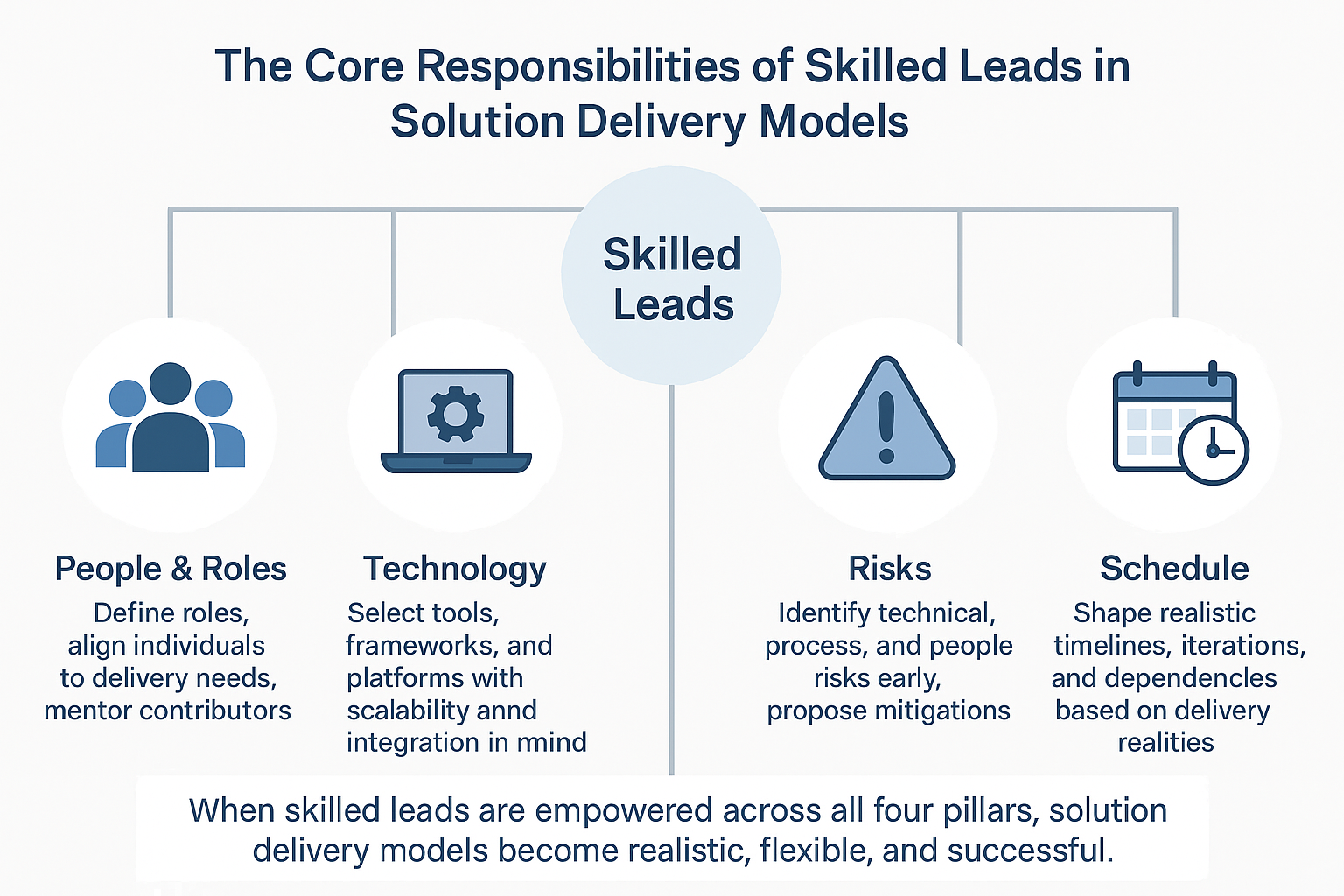
3. Responsibilities of Skilled Leads
Engaging skilled leads early is only the beginning. For a solution delivery model to succeed, these leads must have clear responsibilities and the authority to carry them out. Their role is not just advisory — they are the architects of how delivery will actually work.
Key responsibilities include:
-
Defining the people and roles required
Skilled leads identify the specific roles needed (e.g., developers, testers, UX, DevOps) and recommend individuals whose skills align with delivery requirements. This ensures capability gaps are addressed from the start. -
Guiding technology choices
With their hands-on experience, skilled leads evaluate and select appropriate tools, frameworks, and platforms. They weigh trade-offs, considering scalability, maintainability, and integration with existing systems. -
Identifying risk components
Skilled leads spot risks early — whether technical (integration bottlenecks, data challenges), process-related (unrealistic timelines, unclear requirements), or people-related (skills gaps, single points of failure). They surface these risks with actionable mitigation strategies. -
Shaping the delivery schedule
Rather than having a schedule imposed from the top down, skilled leads provide input based on delivery realities. They help define phases, iterations, and dependencies to ensure the plan is achievable.
By formalizing these responsibilities, organizations empower skilled leads not just to contribute, but to shape the project in ways that directly increase the likelihood of success.
4. Align Delivery Foundations With Skills
While enthusiasm is valuable, delivery models succeed when every foundational area is matched to real capability — not just availability or volunteer interest. Skilled leads ensure alignment across four dimensions:
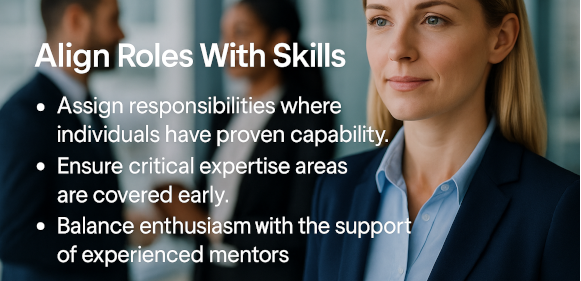
- Roles: Responsibilities are assigned to individuals with proven capability, and contributors are supported by experienced mentors.
- Technology: Tools, frameworks, and platforms are chosen by those who understand scalability, integration, and long-term sustainability.
- Risks: Common pitfalls are identified early — whether technical, process, or people-related — with mitigation strategies in place.
- Schedule: Timelines are shaped by delivery realities, not just top-down assumptions, ensuring phases and dependencies are achievable.
This comprehensive alignment, led by skilled practitioners, creates resilience and prevents gaps that would otherwise stall progress.
5. Empower Leaders With Authority
One of the most common pitfalls is giving leaders accountability without authority.
- Accountability means owning the outcome.
- Authority means having the power to make decisions that affect that outcome.
For solution delivery, authority must extend to shaping the team, defining roles, guiding technology, and influencing the schedule. Leaders who are accountable for delivery must also be trusted to make these decisions. Without this, projects risk drifting into firefighting and frustration.
6. Build the Team Around Perspective
Veteran professionals bring pattern recognition from years of past projects. They’ve seen what works, what fails, and what pitfalls repeat themselves. Successful solution delivery models use this intuition constructively, not just as “advice,” but as a foundation for how the team is built and guided.
When skilled leads are engaged, their intuition supports every responsibility outlined earlier:
- People and Roles: They sense when a role is missing or misaligned and recommend adjustments before gaps become critical.
- Technology: They can spot when a tool or framework is a poor fit for the project’s scale or integration needs, often before formal evaluations reveal issues.
- Risk Components: They recognize risk patterns — unrealistic deadlines, single points of failure, brittle integrations — and raise flags early.
- Schedule: They know how long certain tasks really take and adjust timelines to avoid setting teams up for crunch or missed milestones.
By weaving this experience-driven perspective into the model, skilled leads make it realistic, flexible, and resilient. Management’s role is to trust and empower these insights rather than override them with top-down assumptions.
When models are shaped this way, teams are empowered to adapt, collaborate, and deliver effectively — not by chance, but by design.

7. Best Practices for Strong Solution Delivery Models
To build delivery models that succeed, managers should focus on empowering skilled leads and aligning the model with delivery realities. Key practices include:
- Engage skilled leads first and give them authority over defining the team’s structure — including identifying roles and selecting individuals who align with project requirements.
- Align skills with responsibilities so every role is filled by someone capable of meeting its demands, with enthusiastic contributors supported by experienced mentors.
- Empower skilled leads to guide technology choices, weighing trade-offs in scalability, integration, and maintainability rather than relying solely on external preferences.
- Leverage skilled leads to identify risks early — technical, process, or people-related — and plan mitigations before they grow into issues.
- Shape realistic schedules with input from skilled leads, ensuring timelines reflect actual delivery realities rather than top-down assumptions.
- Pair authority with accountability, so those responsible for outcomes also have the decision-making power to shape them.
- Respect technical input across all decisions, creating a delivery model that adapts and evolves with project learning.
By following these practices, managers transform delivery models from paper diagrams into operating systems that enable real, sustainable success.
8. Closing: From Models to Outcomes
A solution delivery model isn’t just a diagram — it’s the operating system for delivery. Done well, it empowers teams and leads to successful outcomes.
By starting with skilled leads, granting them the authority to shape the team, and making them responsible for people, roles, technology, risks, and schedules, managers create delivery models that reflect the realities of software work. This balance of accountability, authority, and expertise is what sets teams up for success instead of struggle.